The 5-Layer Salad Architecture: How to Build a 40g-Protein Meal That Stays Crisp for 4 Days
 T
Every weekday around 1:30 PM, the same silent frustration unfolds in office break rooms and home kitchens everywhere. You prepared a salad on Sunday night with the best of intentions, but by Wednesday afternoon, opening the container reveals a swamp of limp, discolored leaves swimming in watery liquid. To make matters worse, even when you force yourself to eat it, you find yourself foraging through the pantry for carbohydrates sixty minutes later.
The standard salad is plagued by two structural flaws: an enzymatic moisture catastrophe and a profound lack of protein density. When delicate greens sit directly against acidic dressing, osmosis pulls water out of plant cell walls, transforming crisp cellulose into mush. Simultaneously, salads built on a foundation of watery iceberg lettuce, cucumbers, and a token sprinkle of cheese provide less than 8 grams of protein—far below the threshold required to stimulate muscle protein synthesis or trigger meaningful satiety hormones like peptide YY and GLP-1.
A salad should never be an act of caloric penance or an apology for lunch. When engineered using basic kitchen physics and nutritional biochemistry, a salad becomes a dense, 40-gram whole-food meal that stays razor-crisp for up to 96 hours. Here is the complete standalone framework to build it.
The Physics of Sogginess: Osmosis and Enzymatic Collapse
To preserve fresh produce across four days, you must understand what causes decay inside a closed container. Plant leaves are filled with water held under turgor pressure within cellulose cell walls. When salt and vinegar come into direct contact with raw leaves, they create an osmotic gradient: water rushes out of the cells to balance the exterior salinity. Deprived of turgor pressure, the cell walls collapse, creating that familiar bruised, translucent appearance.
Furthermore, bruised leaves trapped in high humidity release ethylene gas and moisture, accelerating bacterial breakdown. The solution is not to buy expensive vacuum-sealed containers, but to leverage gravity. By arranging ingredients into five distinct vertical zones based on moisture tolerance, water activity, and physical density, you isolate your delicate leaves from humidity while allowing heavy ingredients to marinate and improve over time.
Layer 1: The Acid Reservoir and The Quick-Pickle Shield
The absolute foundation of your container must be the dressing reservoir. Never coat your salad ahead of time; let gravity keep the liquid pinned to the bottom until the moment you eat.
The dressing itself requires a tight 3:1 emulsion: three tablespoons of extra virgin olive oil to one tablespoon of unpasteurized acid (such as raw apple cider vinegar, fresh lemon juice, or aged sherry vinegar), bound with a half-teaspoon of stone-ground Dijon mustard or creamy tahini. The emulsifier prevents the oil and acid from separating in cold temperatures, ensuring an even coating when served.
Directly into this pool of dressing goes your "Quick-Pickle Shield"—dense, low-moisture root and cruciferous vegetables that possess thick, fibrous cell structures. Top candidates include shaved red or green cabbage ribbons, diced Persian cucumbers (seeded to minimize moisture), thinly mandolined watermelon radishes, and grated raw carrots. Unlike delicate lettuces, these vegetables do not soften or degrade in acid; instead, they undergo rapid cold pickling, absorbing the vinegar and salt while maintaining an audible, jaw-satisfying snap for up to four days.
Layer 2: The Complex Carbohydrate Sponge
Sitting directly above the marinated vegetables is a layer of chilled, cooked whole grains or firm legumes. This layer fulfills two critical purposes: mechanical protection and sustained metabolic energy.
Mechanically, dense grains act as a thermal and moisture shock-absorber. They prevent dressing droplets from splashing upward into the leafy canopy during transit, while soaking up stray moisture that leaches from the pickling vegetables below.
Metabolically, cooking and thoroughly chilling whole grains—such as pearled farro, black beluga lentils, wild rice, or red quinoa—initiates starch retrogradation. As gelatinized amylose molecules cool, they recrystallize into resistant starch. Resistant starch passes through the small intestine undigested, acting as a prebiotic that feeds beneficial short-chain fatty acid-producing bacteria in your colon. Crucially, resistant starch slows gastric emptying and blunts postprandial glucose spikes, ensuring steady mental energy all afternoon without a blood-sugar crash.
Layer 3: The 40-Gram Whole-Food Protein Core
Satiety is not a matter of willpower; it is an endocrine response. To quiet hunger hormones and stimulate muscle protein synthesis throughout the workday, a meal must deliver a clinical threshold of 35 to 45 grams of complete protein, containing at least 2.5 to 3 grams of the branch-chain amino acid leucine.
Here are four balanced whole-food blueprints designed to hit the 40-gram target without processed protein powders or synthetic bars:
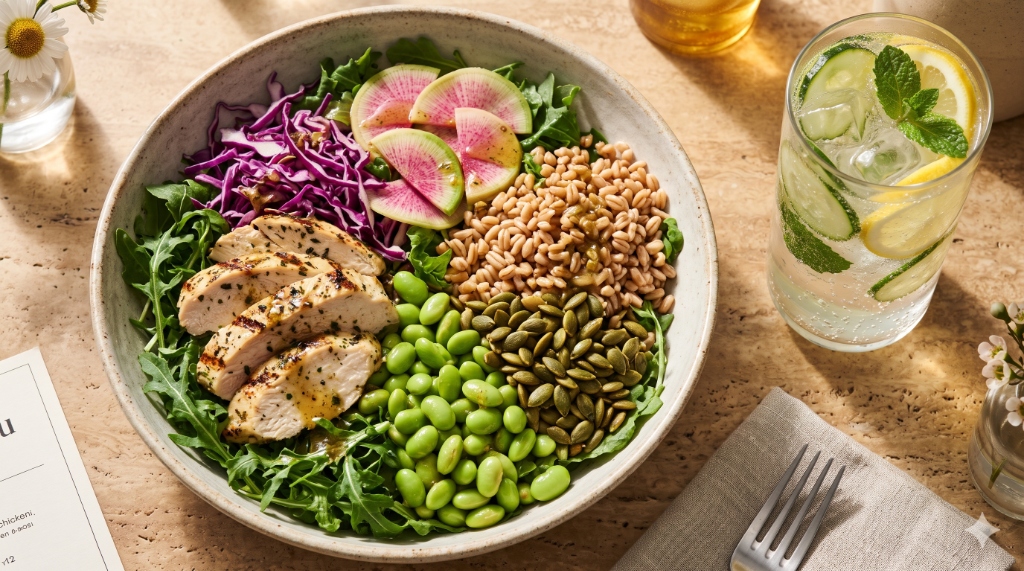
Blueprint 1: The Poultry & Seed Engine (42g Protein) — Five ounces of sliced grilled rosemary-garlic chicken breast paired with one-third cup of steamed edamame. This classic combination delivers 42 grams of complete, high-leucine protein with virtually zero saturated fat.
Blueprint 2: The Cold-Water Marine Bowl (40g Protein) — Four and a half ounces of flaked wild Alaskan salmon combined with one-quarter cup of whipped Greek yogurt and two tablespoons of raw pumpkin seeds. Rich in omega-3 fatty acids, this pairing yields 40 grams of bioavailable protein.
Blueprint 3: The Mediterranean Whole-Egg Matrix (38g Protein) — One cup of simmered chickpeas, two pastured soft-boiled eggs, and one and a half ounces of crumbled sheep's milk feta. A vegetarian powerhouse delivering 38 grams of protein alongside choline and healthy dietary fats.
Blueprint 4: The Plant-Strong Tempeh Crisp (39g Plant Protein) — Four and a half ounces of pan-seared tamari-glazed tempeh cubes layered with three tablespoons of raw shelled hemp hearts and one-quarter cup of green lentils. Provides 39 grams of complete plant-based amino acids.
Always ensure hot proteins are brought to complete room temperature or chilled before assembly; adding warm chicken or lentils into a closed container will generate condensation that instantly wilts your greens.
Layer 4: The Dry Acoustic Texture Layer
Human appetite regulation is deeply tied to sensory feedback. Neurobiological research indicates that the acoustic feedback of chewing crunchy, dense textures triggers mechanical signals along the trigeminal and vagus nerves, reinforcing satiety signals in the brain far more effectively than smooth purees or soft foods.
This layer must stay completely dry until the meal is tossed. Position it directly on top of the protein layer, choosing from toasted raw pepitas, crushed roasted Marcona almonds, walnut halves, crunchy roasted spiced chickpeas, or toasted sunflower seeds. Because this layer rests safely above the grain sponge and cold proteins, the seeds and nuts remain bone-dry, retaining their fresh-roasted acoustic snap.
Layer 5: The Delicate Leafy Canopy
Only at the very top of the container do your leafy greens enter the frame. Whether you prefer peppery wild arugula, tender baby spinach, shredded Tuscan kale, or crisp romaine hearts, one non-negotiable rule governs this layer: absolute dryness.
After washing, run your greens through a salad spinner twice, then spread them across clean kitchen towels until there is zero detectable surface moisture. Water droplets trapped on raw leaves in an airtight space breed bacteria and accelerate cell rot.
Pack the greens loosely into the top third of your container. Sitting high above the dressing and supported by the structural foundation below, they bear zero compressive weight and remain crisp, buoyant, and lively all week long.
The Field Inversion Protocol: How to Eat
Never attempt to eat this salad by poking a fork down through the top of the container. That guarantees mouthfuls of dry lettuce followed by an over-dressed sludge at the bottom.
Instead, use the three-second "Field Inversion Protocol": take a wide, shallow ceramic bowl, uncap your container, and flip it upside down directly into the bowl.
In three seconds, gravity reverses your entire architecture:
- The delicate greens land first, creating a lofty, aerated bed across the plate.
- The crunchy seeds, roasted nuts, and 40-gram protein core tumble through the leaves, distributing evenly.
- The retrograded grains and pickled vegetables settle throughout the center.
- The emulsified dressing—which spent days marinating your root vegetables—cascades over the top of the entire dish.
Give the bowl a gentle single toss with your fork. Every forkful will carry crisp leaves, rich protein, textured grains, and bright, emulsified acid.
The 30-Minute Sunday Prep Routine
To build four days of lunches in half an hour, work in four structured phases:
Phase 1 (Minutes 0–15): Simmer one cup of farro or quinoa on the stovetop. Simultaneously, grill 20 ounces of chicken breast or sear your tempeh in a wide cast-iron skillet.
Phase 2 (Minutes 15–20): While grains and proteins cook, line up four 32-ounce wide-mouth glass jars. Whisk your 3:1 olive oil and acid dressing and divide it evenly into the bottoms of the jars.
Phase 3 (Minutes 20–25): Slice your cabbage, radishes, and cucumbers. Drop them directly into the dressing reservoir.
Phase 4 (Minutes 25–30): Spread the cooked grains and proteins onto a baking sheet in the freezer for five minutes to flash-cool. Divide the chilled grains, proteins, seeds, and dry greens across the four jars. Seal tightly and store in the main compartment of your refrigerator.
With 30 minutes of intentional kitchen engineering, you eliminate midday decision fatigue, hit your protein goals with whole foods, and never eat a limp, disappointing salad again.